
Top Ten Sources of Culture Shock Coming Back to the States

We’ve been home now for nearly two months now. It’s been enough time to get back into the swing of things here, but we are still recognizing how different our lives are now that we’re back in San Francisco with a home to take care of, a job to commute to, social obligations to attend to, and a to-do list that never seems to get done. Frankly, it’s been a rough adjustment. Here are the top ten differences that we noticed between life on the road and life at home:

10) Speed it up! The pace of life seems like it’s on double-time compared to how we lived traveling through the developing world. We used to plan just one activity a day. Life in the States is structured by hourly activities, meetings, and events. We’re constantly feeling behind and exhausted. What happened to the four hours a day that we used to spend exercising, meditating, and doing yoga?

9) “I’ll take it to go.” To keep up with this fast-paced life, I’ve noticed how much people have to eat on the run. In the developing world, people sit down for meals at home. There is no such thing as coffee cups to go. I’ve found myself already eating meals in the car, on Muni, and while I’m walking. Jenni and I already dropped the 8 pounds we each gained by no longer having three two-hour meals a day.

8) Online all the time. Imagine walking around without a cell phone. Well, we did just that for a year. There were even times when we didn’t have internet connection for over a week. But as soon as I got back, I got my an iPhone and realized that I could check my email every hour if I wanted to. At any moment, people can call, message, facetime, or phone me. I’m trying to figure out just how connected I want to be.

7) LGBT Pride season. Coming home during Pride season was quite a culture shock after traveling last in Peru, a place where LGBT life is still under the radar. Even the San Francisco public buses had their LCD screens say “Equality for All” during Pride week. While we’ve been so used to being the only gay people around this year, we hardly stand out in San Francisco. it seems like everyone is a little gay in this city.

6) “Honey, I’m home.” Returning to work, Jenni now has an eight hour work day and a three hour round-trip commute. At best, we see each other for only a few hours a day. Going from spending all day together to three hours is quite an adjustment. Of course, spending time away from one another is a healthy part of any relationship. But, the thing we miss the most from our travels is the luxury of spending our days together.

5) This Costs How Much?@%&*!. For Jenni’s 31st birthday this July, I wanted to take her on a weekend getaway close to relax. I looked at my favorite websites: AirBnB, VRBO, and Priceline. I gasped that most places within a few hours of San Francisco cost at least $175 a night. We averaged $30 a night all year in the developing world, and many of our stays even included breakfast! My girl is worth every penny, but I couldn’t bring myself to spend $600 with food, gas, and hotels for a weekend. So, we had a dinner with friends at home and went to a concert. We’re saving the extra for our next vacation abroad where the dollar stretches further.

4) “What do YOU do?.” While visiting a friend I recently went to a happy hour and met a group of new people. Within the first five minutes of any conversation, I got the questions, “So what do you do?” When I answered, “I just traveled the world,” I got lots of questions followed by, “So what are you going to do now?” That’s when I would say,” I don’t know. I’m looking for a job.” Silence. Some shame even. I never realized how much our identity is formed by what we do and how uncomfortable it can be to say you don’t know. While I appreciated the uncertainty while traveling, the uncertainty now only produces anxiety back at home.

3) Back to Recycling. The developing world isn’t up to date with recycling. In San Francisco, it’s the law. We’re the first city to require residents to participate in recycling and composting programs. You can actually get fined for throwing away a can instead of recycling it. I felt criminal throwing my bottles and papers into the trash during our travels. I now feel good everyday I sort my trash.

2) Accessible Toilets. I really must say that I don’t miss the squatting holes in the floor in Asia or having to carry around my own toilet paper. Finding paper toilet covers and automatic flushers are a sign of the advanced world. Jenni and I rented so many rooms in hostels with shared bathrooms this year that it seems unimaginable that we have our own bathrooms (two even!)  in our house. We’re totally spoiled.

1) Free Water: It’s really the little things that matter some time. This whole year in the developing world, we were warned not to drink the water. We’ve gotten so used to buying bottled water that we forgot what an amazing luxury it is to have clean water come out of a tap. Many times in restaurants, a bottle of water costs the same price as a beer, so it’s an easy choice to go for the beer. Basically, I spent the year dehydrated and drunk. These days, I walk into Starbucks or McDonalds and can ask for a tall glass of water and they’ll give it to me for free. A daily gift!


Photo 1

Photo 2

Photo 3

How to Get an International Degree On a Shoestring


Knowing how much I loved travel, I considered staying a third year in graduate school to get a specialty in International Social Work. But in the end, I couldn’t validate spending $35,000 on tuition, room, and board for something that I could put together myself for far cheaper. Are you one of those people who have considered getting a degree in international relations, international business, international development, or international policy? Let me tell you how to get a real international education…

Out & Around is not only about global LGBT rights. It’s about becoming better global citizens. Traveling through the developing world, Jenni and I can’t help but feel our privilege status in the world due to our educational opportunities and personal freedoms. We were also constantly reminded of our wealth…. if you earn over $25,000 USD a year, you are among the top 10% of richest people in the world. Jenni and I need to use our Supergay powers for good.

Do you also want to earn your own custom designed international degree in a year? Here are top ways to earn your own masters degree to being a good world citizen:

Subscribe to the Economist magazine. It can seem kind of dense the first run through, but read it cover to cover. I have to admit that as someone who heads straight to celebrity gossip magazines at newsstands, the Economist was not my first choice for airplane reading. But it got easier as I caught onto world events, and it sure came in handy when talking to people while traveling. Find a developing country that most interests you and decide to travel to that destination.

- Provide a micro loan. Lend $100 to someone in that destination country via a micro-financing organization like Kiva.org. For her birthday, I gave Jenni a gift certificate for Kiva. She loaned the money to a woman in Cambodia who was starting a noodle stand. You’ll be amazed when your loan gets repaid back.

- Become familiar with the language of your destination country. It may have been high school since your last foreign language class, but you can easily pick up the basics without a big investment. For example, Coffee Break Spanish has 128 podcasts for free.

- Buy a plane ticket immediately. Go for as many vacations days as you can, or ask to take an unpaid leave of absence for at least one month. Jenni’s company gave her a whole year of leave, which goes to show that you never know what you can get until you ask. And if you’re worried about the money, realize that in many parts of the world your dollar will stretch much farther than you think.

- Find the local community. If you live in a metropolitan area, find the community of immigrants from your destination country within your own city. Try their food, ask about where you should travel, and find out what they miss about their home country.

- Take a sabbatical from television. Automatically gain 2 hours of your life a day. From your local library, read 5 books about your destination region. Coming home, we decided to banish the television out of our living room. There’s too much to do in life than watch bad TV.

- Live with Less. Most of the world lives far more simply than you. Consider how little you need to live on and simplify. Pack light. Having spent one year with just our backpacks, we realized that stuff really weighs you down – physically and mentally. When we got home and started unpacking our boxes, we decided to take up a new minimalist attitude by getting rid of half of our stuff. Read The Joy of Less if you’re looking for some minimalist inspiration and how-tos.

- Look to Unwire Your Life. Most people in the world don’t have a MacBook, iPad and iPhone. Take some down time from your devices, and get out in nature for a sensory experience. Admittedly, we were on our computers a lot throughout our trip. But some of our best times were when we were trekking or in the jungle because we couldn’t get wired and had nothing to distract ourselves from the present experience.

- Find a Volunteer Project in Your Destination Country. Whether you volunteer 2 hours a day or 8 hours a day, there is an organization that needs your help. When Jenni and I started this trip, we considered a lot of different volunteer opportunities. We asked ourselves what we were most passionate about (the gays!) and what skills we had to offer, and that’s how Out and Around was born.


- Learn about Local Practices. Interested in learning yoga in India, surfing in Bali, tango in Buenos Aires, or jiu-jitsu in Brazil? In addition to learning a new skill, getting engaged in a local practice provides a venue for you to meet locals.

- Interview Locals. Try understanding the world from someone else’s perspective. The thing we loved most about this project was spending time with people and hearing their stories. Now, you don’t need to undertake a big project to do this. Most people love talking about themselves, so all you need to is ask and listen.

- Share Your Ideas Back Home: Whether sending out emails to family and friends or starting an ongoing public blog, find a way to share your learnings. Instead of just having one professor reading your thesis, you can have thousands of people following your ideas.


* Inspired by the book The Art of Non-Conformity by Chris Guillebeau

“Be Safe”

This trip has plenty of reasons to make our families nervous. We are two women traveling in the developing world carrying thousands of dollars of computer and camera equipment. Where we’ve been, robbing us would probably feed an entire family for a year. And let’s not forget the risk of traveling in countries where homosexual activity is illegal.
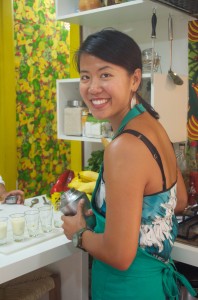
So it makes sense when people from home tell us all the time to “Be Safe.” At the airport in San Francisco, Jenni’s dad told her, “Don’t trust anyone.” After all, bad things happen to good people all the time.

But it’s the warnings from locals in the countries that scare us the most. On our way to Bali, people warned us to get our luggage wrapped so as not to risk a life imprisonment sentence should someone try to transport drugs in our bags. In Nairobi (coined as ‘Nairobbery’), our taxi driver told us not to drink any alcohol pre-poured from bars because people might try to drug us and steal our belongings (or worse). While walking through Rio de Janeiro, we received multiple warnings from locals to keep our camera in our backpack or someone surely would rob us.

It’s easy to feel paranoid when you travel in developing countries. Take a peak at the US State Department’s warnings and you’d never leave U.S. soil. While traveling, we’ve had to assess several times whether our fear comes from real danger, imagined threats or even some of our own unconscious racism. But early on, we realized that we had to shift from an attitude of fear to one of trust if we wanted to make it through the year. Otherwise, we would never leave the hostel.

The thing is, people really are mostly good.

Each time we’ve gotten lost in the streets of South America, miraculously someone always appears to point us in the right direction. When we’ve left our computer and camera equipment in $15 hostel rooms throughout Asia, none of the cleaning personnel ever stole anything. When we’ve taken public buses in East Africa, other riders bickered on our behalf when ticket collectors tried to charge us double.

We’ve stopped sweating the small stuff, and we’ve recognized that there will always be mishaps. We’ve been a victim of a tourist scam in an Indian train station, we’ve broken computers and dropped cameras, and we’ve gotten lost about a million times. As hard as we’ve bargained, people have ripped us off. As much as we’ve tried to eat cautiously, we’ve spent full days sitting on toilets. We’ve had to cancel our plans to trek Mt. Everest base camp due to extreme weather, and we were forced to cut out two countries after running over budget.

But even when things have gone wrong, we’ve reminded ourselves that we’re safe. We haven’t had to seek medical care or return home for any family emergencies. Strangers have opened their homes to us, donated to Out & Around, and given us valuable travel advice.

It’s in our human nature to love, help one another, and smile. In particular, we’ve felt a special connection when meeting other queer people around the world. You truly can find “family” anywhere.

In the developing world, we can’t help but realize that we are within the top 1% of wealth in the world. Our blue U.S. passports give us the privilege of freely entering most borders. We’ve never experienced food or housing instability. We don’t have to worry about military coups or civil wars or economic collapse happening in our country. We’re not at risk of incarceration or death for being gay.

The glass is over-flowingly full. Living with optimism and without fear may be our biggest gain from these travels. We’re lucky. We’re lucky. We’re lucky. The more we can remember that, the more we want to reach out without reserve to help others. The more we connect with others, the less we fear. And that gives us the freedom to enjoy this great adventure all the more deeply.

Dreaming of Trader Joes and Other Signs of the Homestretch

It’s official: We purchased our return plane tickets and on June 12th, we’ll be back in San Francisco after a one year tour around the world. Now in Brazil, we’re on the homestretch. With only a four hour time difference, home doesn’t feel that far off. We’ve noticed a major shift in our mentality as we wrap up our last two months of travel.
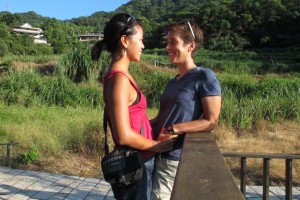
What are the signs that we’re ready to come home?

I’m dreaming about shopping the produce section of Trader Joe’s: After ten months of trying to find safe dining places where you won’t have to take antibiotics after consuming a piece of lettuce, we can’t wait to cook our own food. We’ve started renting apartments with kitchens so that we can cook ourselves: Better for our budget and our bodies.

We’re going Insane to come home in good shape: Since our travel experience includes eating anything and everything in a given country, Jenni and I have gained a combined 12 pounds. On my 33rd birthday on March 2nd, I started the Insanity fitness program and have been consistently power-squatting and jump-tucking my way across Rio. We’ve also started limiting ourselves to one empanada a day (you don’t even want to know how many we were having before). When we began this trip, we had dreamed of coming home in the best shape of our lives. Now, we’re just trying to get back to the same size we were when we left.

We’re phasing out the safari-wear:While the quick-dry cargo-shorts look worked perfectly for the Serengeti and the Himalayas, you’d look pretty silly in your NorthFace gear at a club in metropolitan Rio de Jainero or Buenos Aires. Every time we go out for a night in town, I stare forlornly at my limited clothing options (should I wear flip-flops or sneakers?) and wish desperately for access to my closet at home. Meanwhile, Jenni is so sick of having bad hair that she has sacrificed travel minimalism to buy a hairdryer.

Jenni is planning the interior decoration of our house: Believe it or not, Jenni and I never lived the lesbian dream of playing house, raising pets, and making homemade hummus. We delayed the whole U-Haul thing and had two separate residences up until we left. Now that we’re returning to one home, Jenni can’t wait to start filling it up with all the furniture, kitchenware, and furnishings that she always wanted but didn’t have space for in her little studio. We explored furniture stores in Brazil looking for ideas. We bargained with several Indian carpet makers. We debated about numerous Cambodian paintings. We haven’t been able to agree on anything and have only concluded that we have completely different tastes. But we talk about our new home all the time now.

We’ve become terrible tourists: Jenni and I had lots of ideas about places to visit in Brazil after arriving in Rio. But then we never left Rio. Packing, unpacking, and planning take a considerable amount of effort (not to mention money), and we’ve lost some of our energy to race around the globe. Based on our experience, we’ve learned to stop when we’ve run into a good thing. And with it’s samba clubs, gay beaches, and delicious street food, Rio de Janeiro is a very good thing.

We’re starting to think about getting back to a 9-5: Of course, the biggest transition to life back home will be returning to a job. Jenni restarts her role at eBay in July. I’m currently reading “What Color is My Parachute?” and gearing up for the big job hunt. Our project with Out & Around has kept us from becoming useless sloths this year. We’ve kept a pretty regular 10-2 “work” schedule and have gained lots of new transferable skills from our project such as marketing, networking, web development, writing, and filmmaking. Our time off this year has given us new energy to pursue our careers once we get home. Work isn’t a bad thing. And after seeing how much of the rest of the world lives, we feel incredibly grateful to have opportunities and resources waiting for us at home.

Our Top Ten Must-Have Gear for Travel


Jenni and I don’t have any of our wedding plans set yet, but there is one thing we both agree on: we’re registering at REI. We’re both gear geeks who believe that less is more, especially when traveling. That being said, we do have ten absolutes for our backpack that we wouldn’t travel without for a long term trip. You can check out our full packing list with a video here.
*** Disclosure: We don’t receive any endorsements for these companies (though we wish we did), so you can trust that we just really love this stuff ***

10) Quick-dry Everything: As you can probably tell from our photos, we’ve chosen practicality over fashion. A friend who works for Brooks mailed us quick-dry t-shirts that we wear all the time. We also have quick-dry shorts and underwear (highly recommend these ones from Ex Officio). One of the biggest mistakes I made was to pack cotton t-shirts. They get moldy in humid weather, and when you sweat they stink like nobody’s business.  


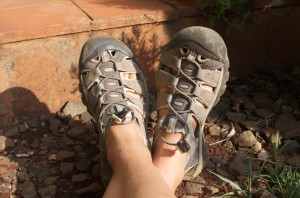
9) Keens footwear: When Jenni and I first started dating, I had a beat-up pair of Keens sandals in my closet that she made me donate to Goodwill. Always more fashion-forward than me, she convinced me that I should never be one of those Keens-wearing lesbians. Now, I cannot take Jenni’s Keens off her feet. The ideal footwear for long walking in humid weather, we may not be winning any awards for fashion but our feet sure are happy.

8) Canon G12 Camera: We bought this camera because it is the best point-and-shoot on the market today and it takes HD video. Best yet, we can travel with it in our pocket or small purse without drawing a lot of attention. We also have the Nikon D5100 DSLR for our documentary work, but the G12 is best when you don’t want to be caught with a huge theive-attracting camera dangling around your neck.

7) Laundry line: One of the annoying things we’ve had to adjust to with long-term travel is hand-washing our own laundry. And given our small inventory of clothing, we’re washing something everyday. Best laundry lines are the ones made out of braided elastic that don’t require you to use clothespins. Our favorite was a gift from my sister: The REI laundry line

6) Silk Sleeping Liner: This thin sleeping bag of silk which rolls up into the size of my fist allows you to bring your own sheets anywhere in the world. This is a must when staying in backpackers hostels. Plus using the silk liners help us feel a sense of consistency in our bedding which is a nice thing when you’re moving around so often. The only thing is that these liners aren’t exactly good for “romantic” time since each person is in her own sack…

5) Laptops: Yes, they can be a pain to lug around. And yes, there’s aways concern about getting them stolen. But honestly, I cannot imagine traveling without our Macbook laptops. While there are many internet cafes available, the computers are seriously two decades old with AOL-era dial-up internet. With your own laptop you can use wifi (often free in hotels and restaurants) or buy a modem to hook into 3G (which I am currently doing from the beach in Mombasa, Kenya). Plus, when you need a break from travel, you can turn your laptop into an entertainment center and watch movies and TV shows to stay sane.


4) Kindle: Nothing wows other tourists more than our Kindle e-book readers. It’s not always easy finding a good selection of english books when abroad (and when you do, the prices are pretty jacked up). With the Kindle, we can reference our Lonely Planet guides, catch up on news with the latest issue of Times, relax with our novels – all from a device that fits into my travel pouch. Best thing is that the batteries last forever which is very important when you’re trekking in the Himalayas for weeks at a time.

3) Portable Audio Speaker: Another one of our devices that attracts attention is our little pink Music Angel speaker (a $20 find in a Taiwanese electronics superstore and also available on eBay). We’ve stayed in some bare bones hostels where the owner’s idea of ambience is taping a plastic flower to the wall. One way to feel better about crappy lodging situations is to play music. Plus, the speaker drowns out the sounds of traffic, annoying neighbors, and any insects buzzing around in the room that we try hard to ignore.

2) A Head Lamp: Never ever leave home without one. In developing countries, you never know when the electricity might cut out. They’re a must when we are walking home at night through poorly lit streets. In addition, they are an ideal reading light when one partner dozes off early.

1) A Scarf: The best multipurpose apparel, scarves are great for staying warm on flights and trains and buildings where the A/C is on full blast. They’re also easy to take on and off depending on the weather while trekking. Scarves are good protection against foul smells, polluted air, and hot afternoon sun. Plus, we’d like to think they add a bit of flair to our otherwise dowdy travel outfits. Our most creative use of a scarf – when we were stuck overnight in Agra without our luggage, we wrapped our scarves around our legs and turned them into pajama bottoms.


Top Ten Ways Not To Kill Your Partner While Traveling

We knew that traveling together for a year would be the ultimate test of our relationship. We joked about this make-it-or-break-it situation. Now engaged, we know that this journey has only made us stronger. But, the truth is that we fought a ton right before leaving and during our first month traveling.

It was a big change to shift from our independent daily routines at home to spending nearly 24/7 with one another (not to mention dealing with the stress of travel). But since then, we’ve made some changes in our relationship. Here are some ways we’ve managed not to kill one another…

10) Define Roles: Our biggest conflicts came from us two control freaks trying to do too much with all hands in everything. I hated every moment learning HTML to update the website. Jenni grew frustrated writing press releases. We learned to leverage our strengths. As a social worker, I’m a natural networker. I become in charge of finding the Supergays, spreading the word about our website, and handling public relations. Coming from the tech world, Jenni had the best skills to create the videos, manage photography and video data, and create our website. We now have a better appreciation for each other’s unique skills, and we stick to the things that we’re best at.

9) Share the Big Stuff: After we learned How Not to Budget, we realized that handling the finances was too big a job for any one person. So, now I keep daily track of our spending on a spreadsheet while Jenni runs a monthly report using Quicken. Our tallies still depress us, but by sharing the responsibility we only have ourselves to blame. We also share the responsibility for travel planning. Jenni made the arrangements for China, Taiwan, and New Zealand where she spoke the language and had contacts. I booked everything for Australia and the Philippines where we stayed with my family.

8) Cruise Captain of the Day: Our friends and fellow world travelers, Kelly and Aaron, suggested this idea that we used for several months. On even calendars days, I put on the figurative hat of Cruise Captain and on odd days its Jenni’s day. The Cruise Captain gets the power to plan the day’s activities and have the final word on any decision. This structure helps us to share responsibility and make definitive decisions. We also periodically rely on the scientifically proven rock-paper-sissors method as well as the flipping-a-coin method to decision making.

7) Journaling: Jenni has become an avid fan of daily journaling. I swear that half of her entries begin….”Lisa drives me crazy because…..” Journaling has helped her to sort through her thoughts, explore the source of her feelings, and not blame me (at least right away) for everything.

6) Bring a Book to a Meal: Most days, we sit down for three meals together. We enjoy each other’s company and can hold conversations for hours. I’m the type of person who insists on turning off the TV while having a meal to focus on conversation. But after spending a full day together, it can be refreshing to check out for a bit with a book during meals. We’ve downloaded books and magazines onto our Kindles. Most days over breakfast and lunch we read our Kindles and then have something more to talk about.

5) Invite New Friends to Join You: We really try not to be one of those unapproachable couples sitting down together closed off to everyone else. Recently in Taiwan, we invited a couple of solo European travelers eating alone to join us. We spent the following four days sharing all our of meals with them and going on a couple of day hikes with them. We also love having friends from home come to visit us. Jenni’s coworker Dave and his wife Laura were the first friends to meet up with us this year, and we shared an unforgettable ten day trek with them in Nepal.

4) Know When to Give in: Australian Supergay and former High Court Judge Michael Kirby, taught us this very valuable lesson that he has learned in order to stay happily married with his partner of forty years. He told us, “I always give in. I always look at the big picture.” Jenni and I try to remember that fighting to win an argument or keeping tabs doesn’t lead to the healthiest relationship.

3) Treat Yourself on Special Occasions: We’ve been staying in the budget $4-$25 a night hostels, but for our birthdays and anniversary this year we’re using Jenni’s Starwoods points that she’s hoarded from her business travel days. We spent five nights at the Westin in Bali for Jenni’s 30th and already have five star places in India and Brazil booked for my birthday and our third anniversary. An occasionally luxury (and good bathroom for scrubbing) is the best way for us to keep up the romance.

2) Spend Some Time Apart: We actually spend far less time apart from one another than we originally thought. At home, we’re pretty independent individuals. During a typical work week, we have our separate schedules and social appointments and don’t see each other most days until bedtime. Abroad in the developing world, it is often most safe for us to stick together at all times. But we try to find time (usually going for solo runs, walks, or trips to the supermarket) to have some time to ourselves.

1) Practice Using the Word “I”: Before meeting Jenni, I was single for many years. Couples used to drive me crazy by using the word “we” so much. Having drinks recently with a single Australian traveler, I realized we had become that couple! Trying not to become overly enmeshed or co-dependent, I ask myself often….What do I want, feel, need? Once I can identify that and regain my own sense of identity, I usually slip right back into couplehood as a better partner.